






When Dreams Are Not Sweet
A few months ago, just as I was going to bed, I heard my 5-year-old daughter crying and whimpering in her sleep.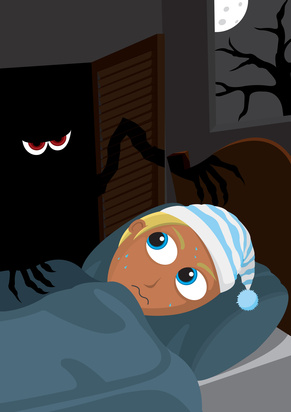 I waited a couple of minutes, hoping she would stop. But when it continued, and even ratcheted up a little with some added screaming, I went in to comfort her.
“What’s wrong?” I asked.
She didn’t respond, just kept crying and screaming. Her eyes were open so I assumed she was awake. I asked her again what was wrong, and again she didn’t answer, just kept crying — and screaming.
By this point, I felt like screaming too. I repeatedly asked what was wrong and tried to comfort her. She kept crying and not responding. Finally — thankfully — she became quiet and went back to sleep.
The sight and sound of my baby crying (and my inability to help) really upset me. And I thought it odd that the next morning when I asked her what had made her cry during the night she couldn’t remember it. Sure, she couldn’t remember, but I’ll likely never forget.
I had no idea what happened that night … until I did research for an article about the sleep needs of children for St. Louis Kids Magazine (see page 22 of the digital version here).
Merielle Hobson, a nurse practitioner for sleep disorders at St. Louis Children’s Hospital, said that nightmares typically happen in the middle of the night, after the child (or adult — unfortunately most of us still have these!) has been asleep for a while. With a nightmare, the child wakes up after having a very bad dream. Parents can comfort a child after a nightmare, and the child will respond, perhaps even to tell parents all about the bad dream.
Hobson also said that children can have night terrors. Unlike nightmares, night terrors happen earlier in the night, not long after the child is asleep. The child seems to be awake but actually is still asleep and going through a bad dream, Hobson explained. Parents are advised not to wake a child who is having a night terror.
“Waking the child will actually make it worse,” Hobson said. And usually, as in my daughter’s episode, the child won’t wake up anyway.
Night terrors are hard for parents because they see their child in distress but can’t help. They can last from a couple of minutes to 30 minutes.
I had an a-ha moment. My daughter had experienced a classic night terror.
Sleepwalking is another scary-for-parents nighttime event. Sleepwalking usually occurs in the first third to half of the night, according to Nancy Birkenmeier, a pediatric sleep specialist at St. Luke’s Sleep Medicine and Research Center. It might occur as slow walking, or the child may run if it’s combined with a night terror.
As with a night terror, a sleepwalking child will not respond to parents and should not be awakened. Parents should gently guide the child back to bed. According to Birkenmeier, sleepwalking can last from two to 30 minutes.
The best treatment for night terrors, nightmares and sleepwalking is to increase the child’s sleep, because a child experiencing these likely lacks sleep, Birkenmeier said. That probably was the case with my daughter’s night terror. She’d been resisting afternoon naps yet not sleeping longer during the night. Fortunately she’s not had any more incidents.
Birkenmeier said that if getting more sleep doesn’t reduce the amount of incidents to fewer than one or two a month, or if the incidents put the child at physical risk, parents should seek professional help.
By Gina Parsons, guest blogger for SmartParenting
Share This Story