


Icing the Competition with a Sports Trainer
My son’s hockey league just finished selecting skaters for all its various Mite-level teams. 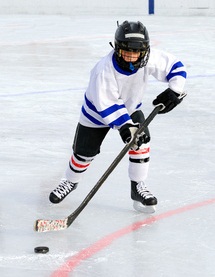 This includes traveling teams of 7- and 8-year-olds. Really?!? Here I thought my son was of an age to be dipping his toe onto the frozen water, when in fact his peers are already hiring private trainers and attending rigorous summer coaching sessions.
Hearing that reminded me of a conversation I had early in the summer with Tom Nuzum, physical therapist and owner of TheraPlus, a Brentwood clinic that offers physical therapy as well as sports training, personal training and sports therapy. He pointed out that times have changed since my younger days -- which would be the early 1990s, when the figure skating world buzzed with Tonya Harding’s ability to land a triple axel. Now, Nuzum said, junior-level skaters practice triple axels. “You have 13-year-olds doing what Nancy Kerrigan couldn’t.”
I don’t know how Mite hockey players of today compare to kids 20 years ago, but I’m betting the story is similar.
“Training used to be team practice and skills, endurance and weights,” Nuzum said. The goals of sports training can be much more individualized: strength, balance, posture, flexibility, trunk mobility, hand-eye coordination, body position, athleticism, acceleration/deceleration, footwork, etc. Some sound downright intense, like “building armor,” which Nuzum described as “the ability to take some punishment, whether it’s contact or hours of play.”
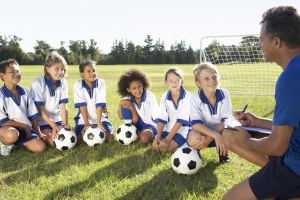
Unlike coaches, trainers don’t usually work on specific sports skills. This is why some of my son’s little hockey playmates are enrolled in both training and coaching programs.
Over the summer, the parents’ goal is usually to have their skaters in top form for fall tryouts. Now that the season has started, the youngest athletes are focusing mostly on sport-specific skills with coaches. But for older kids, parents are often still considering training as a way for their child to earn a top spot on the team, undo bad habits, work on weaknesses, heal from injuries – or all of the above.
When Nuzum evaluates an athlete, he looks at that individual child’s needs to keep healthy and to allow athletic progress to continue. But he also gauges whether the child will need more carrot or more stick. This depends partly on personality, of course, but training age is important too.
Training age is the sum of months or years the child has been training. “Football three months a year for three years is a training age of nine months,” Nuzum explained via email. “Swimming 11 months a year for six years is a training age of five and a half years.” Usually a higher training age correlates to higher intensity during training workouts. “A session can be a great deal of fun or a tremendous amount of work,” Nuzum added.
“The program you really want to shop for is the one your child looks forward to doing,” he said. Not the one with the longest resume, or most start-studded client roster. “Everyone has worked with a superstar at some point,” Nuzum said. “Your child is not at that point in their career. You need someone who can build their skills.”
With a training age of about two and a half years, my son sounds mature on paper, but if daisies grew on the ice, he’d be out there picking them. Then again, he can defer gratification and picture long-term goals, and he likes to come off the ice sweaty and stinky – true hockey player attributes!
By Amy De La Hunt, Health Blogger for SmartParenting
Share This Story

Amy De La Hunt is a journalist and editor who lives in the St. Louis metro area and works across the country as a writer, copy editor, project manager and editorial consultant on everything from fiction books to monthly magazines to blog posts. When she's not chauffeuring her teenage sons to activities, Amy is an enthusiastic amateur cook, landscaper, Latin dancer and traveler. Follow Amy on Instagram @amy_in_words