





More Moms Give Nursing a Try
 We’re used to hearing medical experts talk about new treatments and drugs, but in one area, infant nutrition, they’re all in favor of the oldest method there is: breastfeeding. While formula is a necessary option for some moms, doctors and child development researchers agree that breast milk is best for babies. This is a big contrast to 40 years ago, when not even 25 percent of moms nursed at all. Now, a new report says, the national average of those who’ve ever nursed is nearly 75 percent.
The report from the Centers for Disease Control and Prevention goes into detail on just how many nursing moms there are state by state, and how long they stick with it. Twenty-eight states meet the U.S. Department of Health and Human Services’ Healthy People 2010 goal of more than 75 percent of new moms breastfeeding. Missouri and Illinois, unfortunately, are not among them, with 65 and 70, respectively. We’re not at the lowest end of the scale, but we could do much better. In Oregon and Utah, for example, more than 90 percent of new moms try nursing, and more than 60 percent of them are still nursing when their babies are 6 months old.
This may seem like a long time, but consider that the World Health Organization recommends mothers breastfeed for two years. To most American moms, this seems like an eternity, but when I lived in Germany, it was not uncommon for toddlers to run over for a drink of breast milk now and then, and no one blinked an eye. Back in the States, though, I quit nursing my boys at around 12 months. Still, I felt good about having done my best to enhance their immune system development, foster their digestive system’s function and reduce their risk of health problem like asthma, cardiovascular disease, diabetes and obesity.
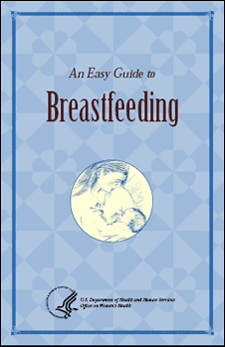
Moms who are aware of those health benefits are more likely to give nursing a try, and countless resources exist for helping them get through the challenging first days, including free online publications like this one. There are many reasons moms are more likely to stick with breastfeeding once they've started: lactation support at the hospital, advocacy by community groups, public awareness of nursing’s importance and workplace flexibility. As I know from experience, it’s also very, very helpful to have someone who can answer moms’ questions along the way, which is where organizations like the Missouri Breastfeeding Coalition come in.
And if you're a techie kind of mom, check out the
By Amy De La Hunt, Health Blogger for SmartParenting
Share This Story

Amy De La Hunt is a journalist and editor who lives in the St. Louis metro area and works across the country as a writer, copy editor, project manager and editorial consultant on everything from fiction books to monthly magazines to blog posts. When she's not chauffeuring her teenage sons to activities, Amy is an enthusiastic amateur cook, landscaper, Latin dancer and traveler. Follow Amy on Instagram @amy_in_words