




Unschooling in St. Louis
St. Louis Kids Magazine recently sent writer Michelle Cox on a mission to investigate unschooling. The little-known educational philosophy is popping up everywhere from mainstream magazines to morning TV shows, and it's arrived in St. Louis too. We wanted to find out more. This is the first of a three-part series.
By Michelle Cox, Contributing Writer to SmartParenting
Valorie Helt wants to raise happy, healthy children and isn’t concerned about whether they will do well on the ACT or whether they will get into college.
That’s why she’s choosing to unschool her children - an approach to education that lets children learn through their own natural life experiences rather than via a structured curriculum or lesson plan.
“My children aren’t performers who I want to see do well on standardized tests so they can get into some special college,” she said. “That’s not my concern. I want them to figure out what they enjoy and do what they love and learn to love people. That’s more important than what their job is.”
Helt and her husband, Brian, live in St. Louis and have five children: a 9-year-old daughter, 7-year-old son, twin 4-year-olds (boy and girl) and a newborn son. Her oldest two children briefly attended what she calls a “play kindergarten” but she has been unschooling all of the children for several years now and intends to continue to do so in some form.
Unlike homeschooling, unschooling does’t use a curriculum or lesson plans. Instead, children learn based on their own interests and curiosity. But like homeschooling, there are varying degrees and methods of unschooling.
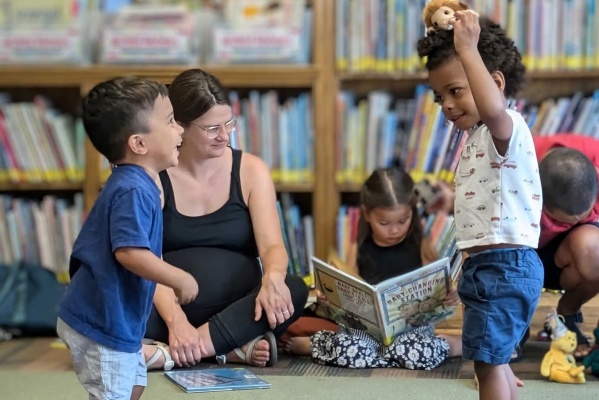
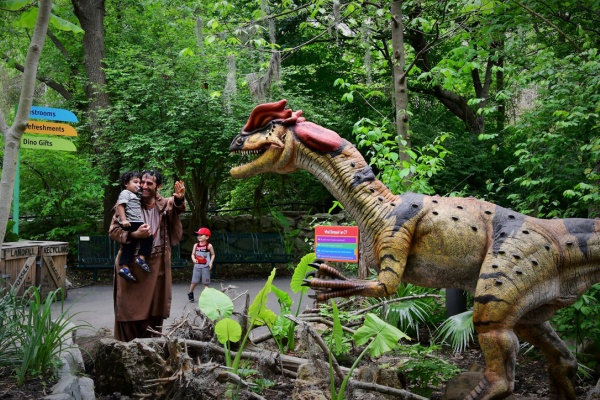
Helt said she uses more of an “anti-schooling” approach until her children are age 7 or 8. “We don’t do any sit-down, formal instruction before age 7. Until that time, we mostly play, go on field trips, visit orchards and the library or zoo, pick apples, everything. Nature is the world’s best classroom,” she said.
When her children reach age 7 or 8, Helt begins to introduce slightly more formal instruction but still lets the children direct much of the learning and keeps things fairly unstructured.
“We do maybe three hours a day of organized work in the morning, and then the rest is more natural learning,” she said. “We might talk about how we saw a squirrel gather three acorns, and then we see the squirrel come back later and get four more acorns, so now he has stored seven acorns for the winter. That’s a more natural way of learning math than putting it on paper, and it makes sense to them.”
A former high school math teacher who also worked in elementary education, Helt said her experience in a regular school setting was the main motivation for her to unschool her own children
“School is mainly about crowd control and lining up and herding and waiting to do the next thing. No one is learning much of anything,” she said. “There was lots of frustration and very little individualized attention or creativity. We work more on imagination and creativity at home, which is a better approach for younger children than rote learning and trying to put things on paper.”
Ren Allen, a mom to four children (ages 20, 17, 13 and 9) lives in Johnson City, Tenn., and she echoed Helt’s lack of concern regarding college entrance requirements, saying that she doesn’t see how school prepares students for college.
On her blog, RadicalUnschooling.blogspot.com, she writes, “If the typical college student is an example of a ‘well-prepared’ adult then I hope my children are not prepared for college at all. I hope they're not prepared to hand over years and years of their lives for a thin sliver of hope at a job they'll despise. I hope they're not prepared to go into debt for that which does not feed their spirit, bring them joy and ignite their passion for learning. I hope they can't do mindless recitation of facts that mean nothing to them. I hope they're not prepared for anything less than exactly what they love.”
Like many who advocate unschooling, Allen practices a radical unschooling approach. Radical unschooling takes the concepts of unschooling and applies them to parenting and lifestyle. The key themes in radical unschooling, according to Allen, are trust and respect. For example, she trusts her children to know when they are tired and to sleep to meet that need.
“I’m not into bedtimes. But that doesn’t mean we don’t have a discussion about how to keep the house quiet for people who want to sleep,” she said.
“It’s not a free-for-all. They get as much respect as I get. It’s never me as the Mom coming in as a hierarchical person and saying, ‘This is how it is.’ It’s a discussion.”
Allen and Helt find lots of support for their decisions within their community and say there are lots of resources to support their efforts. However, the practice also has its critics.
Read more about Unschooling in St. Louis as our series continues next week. We'll hear what the Department of Education says about Unschooling and talk to a mom of three kids, now 18, 21 and 24, who have never stepped foot into a traditional classroom. Read part two of the series here
Share This Story