





Measles 101: What Parents Need to Know
Although measles was declared eliminated in the United States in the year 2000, the once common childhood illness has made a comeback in recent years. If you – like many of today’s parents – know little about this highly contagious and potentially deadly disease, now is the time to get the facts.
Measles is still a common disease throughout much of the world. According to the Centers for Disease Control, an estimated 20 million people worldwide get the measles each year in countries throughout Europe, Asia, Africa and the Pacific. Of these 20 million cases, approximately 146,000 deaths will occur.
Measles cases are still present in the U.S. It’s true that measles were declared eliminated in the United States, but what this means is that the disease is no longer endemic, or constantly being transmitted from person to person. International travelers still bring measles into our country, which still results in outbreaks, particularly among unvaccinated populations.
Measles is an incredibly contagious disease. So contagious, in fact, that 90% of the people who come in contact with an infected individual and who do not possess immunity will become infected themselves. The respiratory virus, which lives in the nose and throat, is primarily spread through coughing, sneezing and, yes, simply breathing.
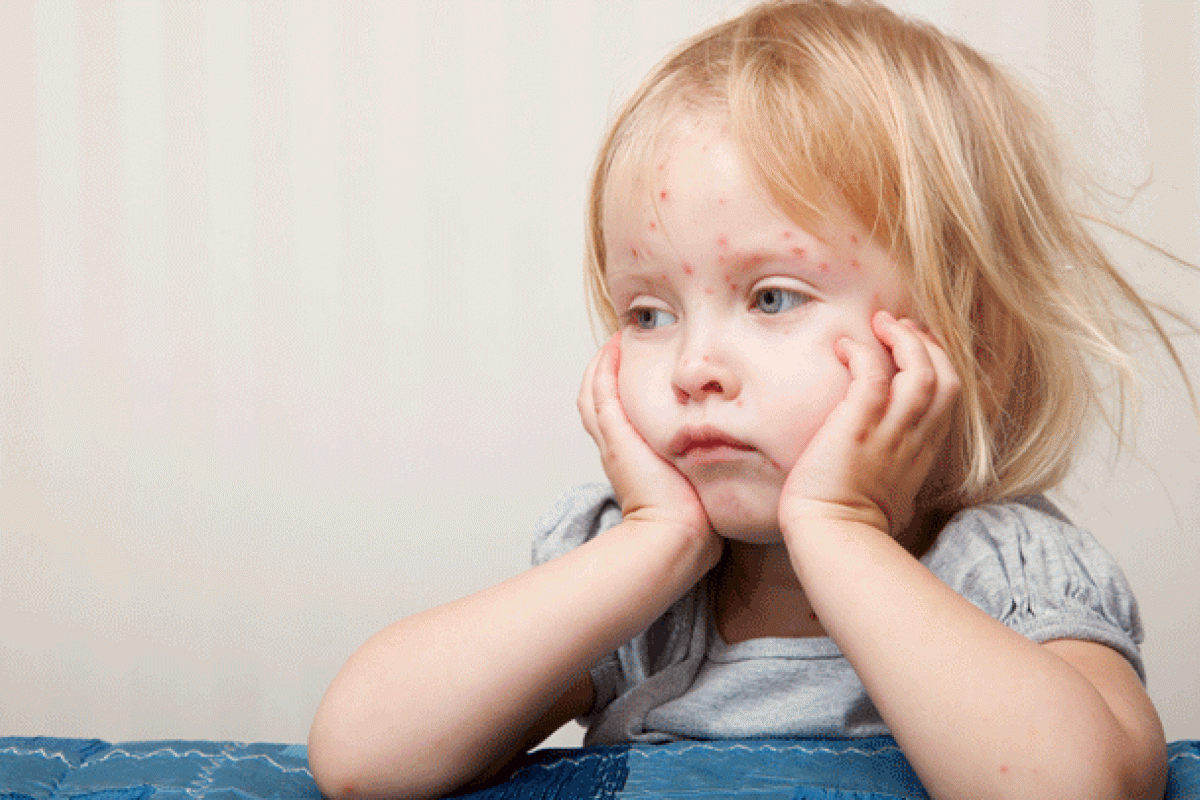
Measles symptoms are fairly easy to identify – but not at first. Measles may originally present like a bad cold, with symptoms including a dry cough, runny nose, swollen glands and reddish eyes. As the illness progresses though, an infected individual will develop a slightly raised telltale rash which consists of small red spots and spreads rapidly across the body. A high fever, reaching 104° to 105° F, is also common.
Complications from measles are rare, but serious. Most individuals who develop measles will recover without incident, but the disease carries the potential for some very serious complications. As many as twenty out of every 1,000 children with measles will develop pneumonia. Encephalitis, a swelling of the brain that can cause permanent brain damage or deafness, occurs in one of every 1,000 cases. And for every 1,000 children who get the measles, one or two will die from it.
Measles can be prevented. The modern measles vaccine, which is included as part of the MMR shot, is considered highly effective. Children who are vaccinated according to the recommended immunization schedule set forth by the American Academy of Pediatrics will receive two doses of the measles vaccine before entering kindergarten. According to the Centers for Disease Control, these two doses are approximately 97% effective at preventing measles.
Vaccinating against measles protects more than just your child. Infants do not receive their first dose of the measles vaccines until the age of 12-15 months, so they depend on the immunity of those around them for protection. The same goes for immune-compromised individuals, such as children with cancer, who cannot get the vaccine either. By making sure that all members of your family are fully vaccinated, you help prevent measles from spreading to this vulnerable population. You also help prevent the disease from staging a comeback, and re-establishing itself in the U.S. as a common – but potentially dangerous – childhood illness.
Source: www.cdc.gov
Share This Story

Alyssa Chirco is a freelance writer, mother and margarita lover, not necessarily in that order. In addition to writing for STL Parent, she is Contributing Editor at Parenting Squad, and covers parenting, health and lifestyle topics for publications across the country. She recently moved from the suburbs of St. Louis to a small town in rural Jefferson County, where she is learning to survive with no Target or Starbucks in sight. Follow her on Twitter @AlyssaChirco