



5 Ways to Help Your Child Build Friendships
For many kids building friendships comes as naturally as breathing in air or waking up in the morning. For others, the process is filled with landmines of fear, anxiety and discouragement. Experts agree that friendship-building is a skill – it can be learned.
Popular children, those successful in making friends, have strong pro-social skills. They show caring for others, often wanting to share something with them or help them in some way. They have strong verbal skills so they can carry on conversations. They’re able to curb their own selfish or aggressive behaviors and instead are good at understanding the feelings of others, seeing others’ perspectives. They’re able to make good choices to help avoid arguments or problems.
In general, children will reject those they perceive to be aggressive, disruptive, irritable, bossy or selfish. The negative character traits raise a red flag: there could be trouble ahead for those who spend time with that person. But they gravitate toward those with positive social skills, knowing they’ll be appreciated, be safe and have fun with that person.
What Can Parents Do?
How can you help your child improve friendship-making skills? What can you do at home to model healthy interpersonal relationships? How can you support your child without intruding and undermining confidence?
If your child is one who struggles with making new friends, there are simple ways to help sidestep relationship landmines. Here are four ways you can empower your children to navigate the often murky waters of friendship-building.
1. Develop Positive Social Skills
Help your child develop those necessary positive social skills such as empathy, cooperation, problem-solving and clear communication. Begin now to model and discuss ways to be a friend. Help your child notice when others need help and offer to give it. Practice talking through a problem to find ways to cooperate. Notice when someone is hurting and say kind words to them. Model a kind act or giving a compliment. Often just one kind word or action makes all the difference in building a friendship. Practice will help your child react appropriately in real life settings.
2. Role Play
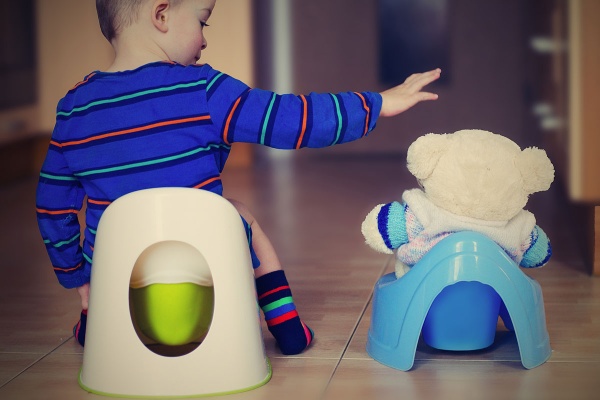
One of the most powerful methods of changing behavior in children is found in role play. When children are involved in acting out ways to cooperate, or what to do when a problem arises, the results are amazing. Role-playing can be done by physically acting out a scenario or through the use of puppets or dolls. Either way, your child is empowered to be part of the solution. Try it, you’ll be pleased with the results.
3. Offer Play Opportunities
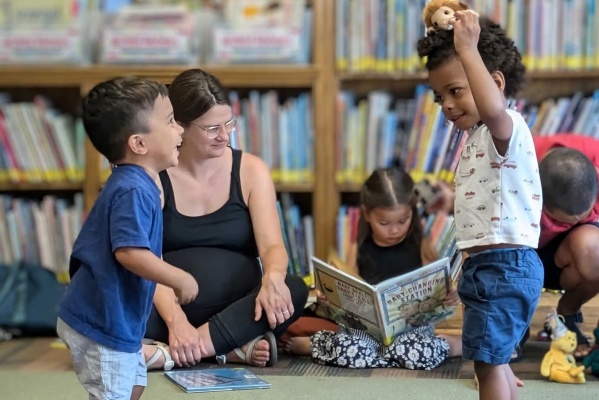
Children need many opportunities to practice their friendship-making skills. They need repetition to master cooperation, or negotiating a solution to a problem as it arises in their play situations. Invite another child to have lunch at your home or plan simple play dates in your community. Be sure to allow lots of unstructured play time in which children can pretend play. Be nearby to guide and redirect when help is needed.
4. Stay Balanced
A good sense of humor is a wonderful character trait for both adults and children.
Life isn’t perfect and friendships may bear a few battle scars. Children need to learn that conflict is a part of life. Thus, learning to resolve conflict is a real opportunity for personal growth. Making and keeping friends is a lifelong pursuit—it won’t be mastered in one day. Build on your child’s strengths. Compliment him when he does well and listen to her when she wants to talk about her friendship ups and down.
You can’t make friends for your children, but you can model, train and redirect behavior in ways that support the skills they need to build healthy, happy relationships.
5. Use Ice Breakers
Try suggesting these ice breakers to help your kids develop social skills:
Do you want to play cars? (dolls, any other game or activity)
(Skill: Initiate Conversations)
That’s a cool bike. Can I ride with you?
(Skill: Compliment)
Why don’t you ask Cameron for help with your cars?
(Skill: Cooperation)
How do you think that made Audrey feel?
(Skill: Empathy)
Can you think of another way to solve the problem?
(Skill: Problem solve)
I like your American Girl doll. Do you want to play dolls together?
(Skill: Compliment)
Should we ask Johnny to play with us?
(Skill: Cooperation)
I wonder if we can make a road for our cars in the sand?
(Skill: Initiate)
I’m sorry I got angry. Can we try again?
(Skill: Problem solve)
Let’s let Sara play with us. She looks sad.
(Skill: Empathy)
Share This Story
Jan Pierce, MEd, is a retired teacher and freelance writer who specializes in parenting, education and family life. She is the author of Homegrown Readers: Simple Ways to Help Your Child Learn to Read.