





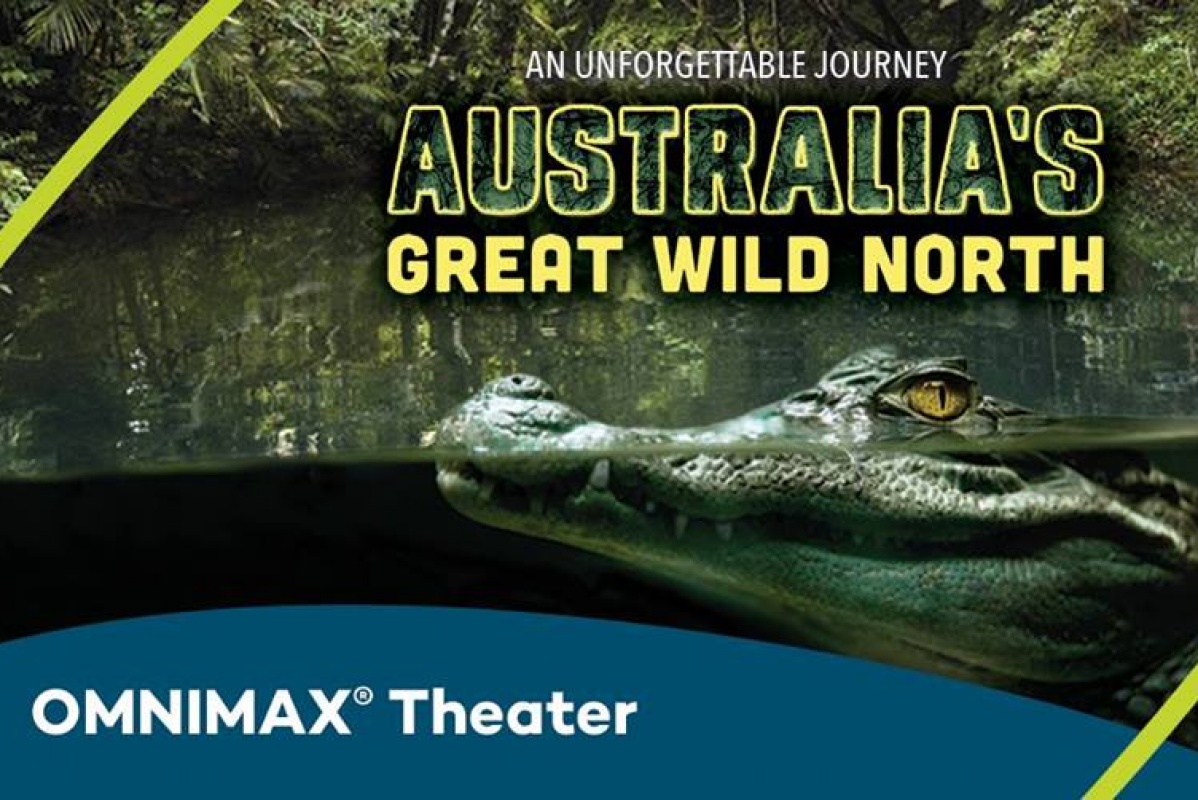
Australia's Great Wild North
Friday, September 14, 2018
This event has already passed.
The newest film at the Saint Louis Science Center's OMNIMAX Theater is an epic journey to far Northern Australia through some of the wildest landscapes on Earth.
Huge bushfires ravage the ancient landscape in the dry season and the world's biggest thunderstorms bring torrential rain and flooding in the wet season. These almost Jurassic conditions have created some of the richest wetlands on Earth. The coast, rivers and wateholes are haunted by sharks. The plains are guarded by territorial buffalo and venomous snakes, but the apex predator here is a living dinosaur: the salt water crocodile. They have been on the planet in almost identical form for 200 million years, even surviving the extinction of the rest of the dinosaurs.
Australia's Great Wild North carries viewes across the whole Top End of Australia, from the wild Kimberly coast through the mysterious and rarely seen Arnhem Land and then deep into the world's rainforest in Cape York.
Tickets are $7 to $10, with free tickets for members. Recommended for ages 3 and up.
For showtimes and to purchase tickets online, visit slsc.org